Time goes very quickly
Well after some lovely summer weather and something of an Indian Summer autumn is finally here. One piece of news is our new look web site so please drop by and see what you think.
On the employment law front there are been some considerable changes over the last few months. In practice some are substantial, others more cosmetic and with the rest the jury is out. I have picked a few items to comment on but if there is anything else you want to know about just give me a call or send an e-mail.
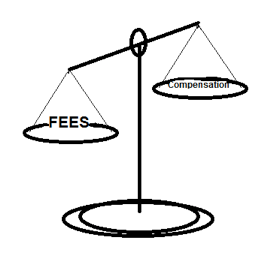
Fees go UP and Compensation DOWN
One of the biggest and most controversial changes in the Employment Tribunal field is the introduction of fees. For the first time many employees will have to pay a fee before they can begin a claim and again before a full hearing. This is being challenged at the moment in England by Unison with a hearing due to take place on 23 and 24 October 2013. Check back on our web site for later updates on this. In the meantime the basics are as follows.
The cost of the issue fee depends on the type of claim.
| Issue Fee | ||
| Type A | Simple types of case e.g. unpaid wages, | £160 |
| Type B | More complex cases e.g. unfair dismissal or discrimination | £250 |
| Hearing Fee | ||
| Type A | Simple types of case e.g. unpaid wages, | £230 |
| Type B | More complex cases e.g. unfair dismissal or discrimination | £950 |
The issue fee must be paid before the tribunal will issue the claim. There is no extension to the time in which to make the claim (normally 3 months but see Early Conciliation below ). Most claims will be made on-line and fees can be paid by debit or credit card. Otherwise claims can be sent by post with a cheque for the fees. The hearing fee normally has to be paid at least 21 days before the hearing.
With a claim made by post if the fee isn’t sent or the amount is wrong then the tribunal will request payment but the time limit on making the claim continues to run.
For claimants on a low income or state benefits and low capital they may apply for the fees to be remitted. The fees can therefore be reduced or remitted entirely. The rules are somewhat complicated and evidence will be needed of the level of income. If there is concern or uncertainty a claimant can pay the fee and there is a limited time to ask for it to be returned if they prove they are entitled to have it remitted. A new application is needed for each fee.
If the tribunal confirms the fee does not need to be paid then then case goes ahead. If they decide all or part of a fee still needs to be paid the claimant is given a fixed time in which to pay. Once the fee has been paid or remitted the tribunal issue the claim and send it to the employer.
There will also be fees for other specific options in the process. For example, a review of a judgement, a counterclaim by an employer, or mediation, all require payment of further fees.
For more guidance take a look at HM Tribunal and Courts Service and guide to fees
From 7 October 2013 a single system for fees and remission of fees will apply across all courts and tribunals.
Although the time limit remains 3 months to bring a claim it may take the tribunal service some time to decide whether a claimant need not pay the fee. Therefore an employer should be aware that they may have to wait a lot longer to be sure whether a former employee is making a claim against them. This could have implications for keeping statements, documents and keeping track of other employee witnesses who may move on.
If a claimant wins their case the tribunal may order the employer to pay the employee’s fees as well as compensation, but this isn’t automatic. The fees may also be part of an employee’s claim when negotiating a settlement with their former employer. However, as the employer will not be told by the tribunal whether the fee was paid by the employee or whether it was remitted, this may add to the complications.
For employees it can cost up to £1,200 to make a claim so is it worth it? Well for small claims, for example for a short period of unpaid notice pay it may not be worth it unless they can get their tribunal fees remitted or paid. Further there are new limits on the amount of compensatory award an employee can get for normal unfair dismissal. The cap is now 12 months wages or £74,200 whichever is the lower. How much effect will this have? Bear in mind that the average employee earns around £26,000 a year and the average successful unfair dismissal claim last year produced a compensatory award of just over £10,000. Therefore the cap may not affect most claims.
I can see you.
Well that’s what an employer didn’t tell an employee who was supposedly at work but wasn’t. The man in question was spotted playing squash in work time so the employer arranged for him to be videoed. Both the evidence from the original witnesses and the video evidence from the investigator proved he was at the local sports centre while he was being paid and supposed to be at work.. Perhaps not surprisingly they dismissed him.
The employee was not happy about what he saw as his right to privacy being infringed. The tribunal felt that the employer had gone too far with the video evidence so they found the dismissal unfair but awarded no compensation.
However video evidence was of him in a public place outside the sports centre and the EAT considered that fraudsters can’t expect their conduct to be entitled to privacy during their employer’s time.
The EAT added that it will be rare for an investigation to be too thorough and make the actual dismissal unfair. Even if the employer had got sufficient evidence in other ways the covert surveillance probably shouldn’t make the dismissal unfair.
However employers should be careful about how they collect evidence particularly through covert surveillance and the use of private investigators. As a result of information from the Serious Organised Crime Agency the Information Commissioner Office is investigating clients of rogue private investigators who used them to obtain personal data about individuals. So take great care to ensure that investigations are carried out legally.
Other tribunal changes
At the same time as the fees were introduced there were other changes to the Employment Tribunal process:
- First the forms have been changed and the new forms must be used. They can only be submitted by post or on-line to a central tribunal.
- The claimant now has to state the amount of compensation they are looking for and how they have come to that figure (though they are not bound by those figures)
- There will be more initial assessments of claims and one type of preliminary hearing to sort out both the management of the claim and substantive preliminary issues.
- More flexibility is envisaged as the preliminary hearing could go on to hear the final case (subject to it being properly constituted and satisfied that neither side would be substantially prejudiced).
- A new procedure for reviewing decisions has been brought in and the tribunal has additional power to assess costs over £20,000 which before it had to refer to the county court.
Early Conciliation.
Another change to the tribunal process is due to come into force on 6 April next year. Employees will have to get a certificate from ACAS to show they have considered conciliation before they can issue a claim. There is no requirement on either party to actually negotiate but if they want to this can help resolve the matter at an early stage. More details next time.
Can you ask the question?
Under the Rehabilitation of Offenders Act 1974 it is normally unlawful to refuse to engage or to dismiss an individual on the grounds of a spent conviction. The only exception is for certain types of employment e.g. work with children or vulnerable adults. Now the rules have been adjusted so that even with that type of employment some old and minor cautions and convictions don’t have to be disclosed. This means that even where the job is for a position which is eligible for a Disclosure and Barring Service check these minor matters will no longer appear on the certificate.
For more details and guidance on what an employer can ask see the DBS guide or give me a call.
Did you find the articles interesting? For more legal articles have a look at our KLG general legal notes. Or if there something else you would like to know about give us a call or e-mail me.
Take care,

| Edit 39. This newsletter looks at new cases and employment related matters, which are likely to be of interest to many. However specialist advice should be obtained before taking or refraining from taking action based on comments in this newsletter, which is only intended as a brief note. For more information or if you have specific concerns phone me on 01233 714055 or e-mail.kirsten@moon-and-co.co.uk. To unsubscribe to our newsletters e-mail kirsten@moon-and-co.co.uk |